Interactive annotation
for medical imaging
Capabilities
AI assistance inside the viewers you already use
MONAI Label runs as a server behind your viewer. Annotators keep their tools; the model keeps learning from every correction.
AI-Assisted Annotation
Interactive models (DeepEdit and DeepGrow) turn a few clicks into full 3D segmentations
Predictions refine in real time as you correct them
Fine-tunes UNet, UNETR, and SwinUNETR backbones in the background
Clinical Integration
Native plugins for 3D Slicer, OHIF, and MITK, plus QuPath, DSA, and CVAT
Reads studies directly from DICOMweb / PACS or a local folder
Multi-user annotation against one shared server
Extensible Platform
Apps are plain Python: swap in your own models and inference logic
Pluggable active-learning strategies (random, epistemic, custom)
REST API for integrating with existing labeling pipelines
Use Cases
Ready-made apps for three imaging domains
Each sample app ships with pre-configured models and viewer integrations. Start annotating in your domain without writing code.
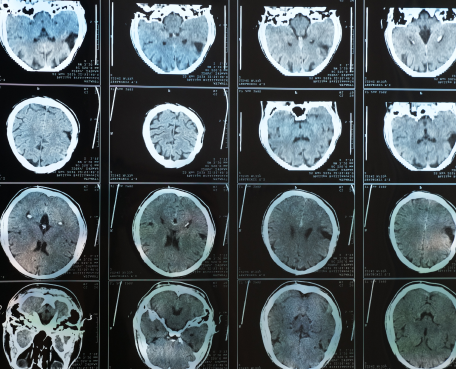
Radiology
Organ segmentation, tumor delineation, and anatomical measurement on CT and MRI, through 3D Slicer, OHIF, or MITK, with DeepEdit and Segmentation models pre-wired.
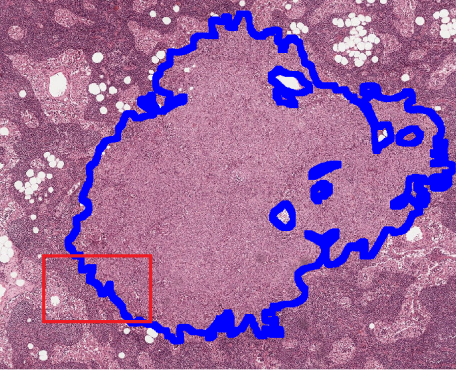
Pathology
Cell detection and tissue classification on whole-slide images, with QuPath, Digital Slide Archive, and CellProfiler integrations for microscopy-scale data.
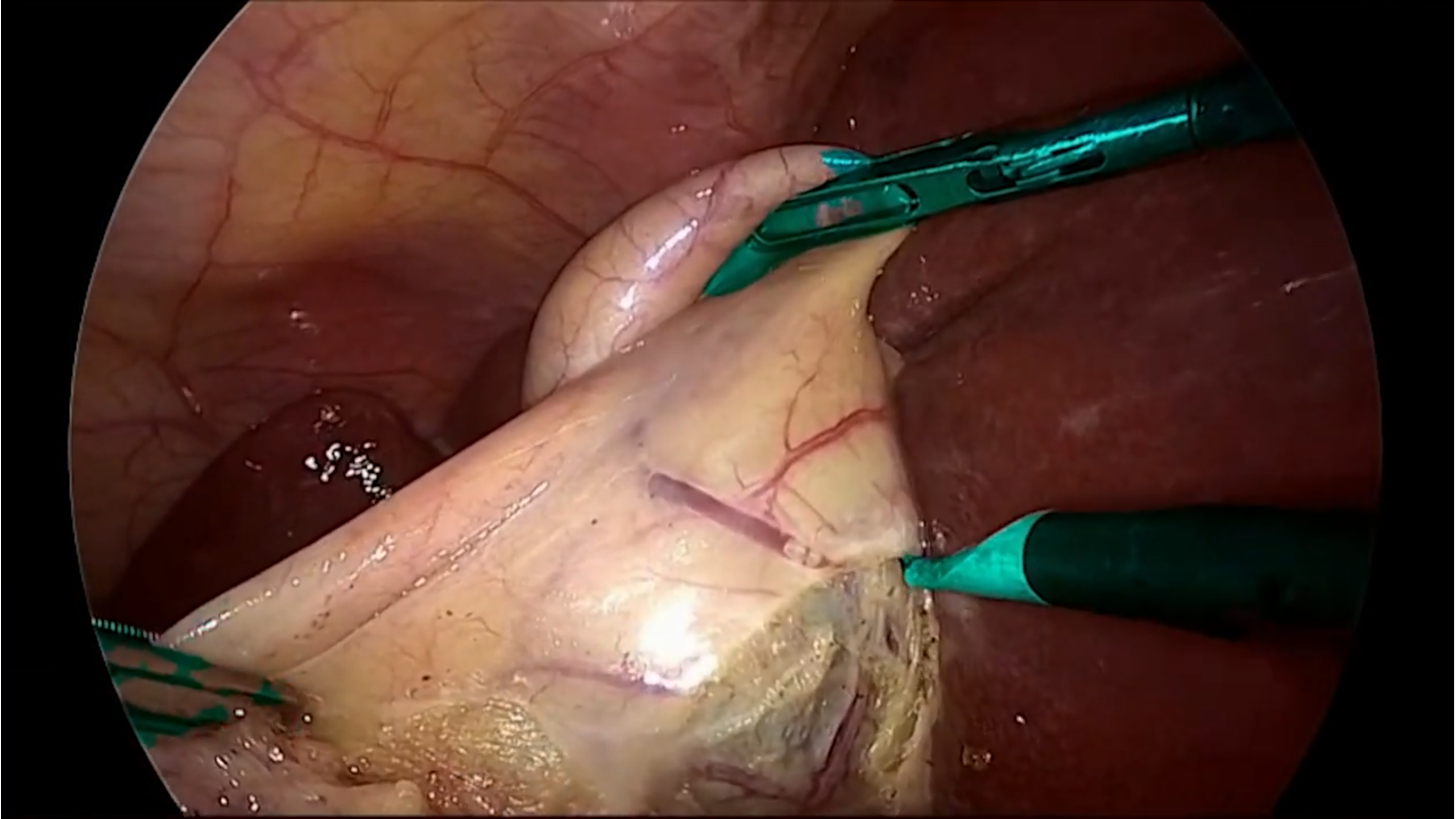
Endoscopy
Polyp detection and surgical-tool tracking in video, with CVAT integration for efficient frame-by-frame annotation and automated propagation.
Quick Start
From zero to an annotation server in four commands
Install the package, grab the radiology app and a sample dataset, and start the server. Then connect from 3D Slicer or OHIF and begin annotating with AI assistance.
Install MONAI Label
One pip install gets you the server, CLI, and sample-app tooling.
$ pip install monailabel
Download the radiology app
Pre-configured with DeepEdit and segmentation models for CT/MRI.
$ monailabel apps --download \
    --name radiology \
--output appsDownload a sample dataset
The Medical Segmentation Decathlon spleen task is a good first dataset.
$ monailabel datasets --download \
    --name Task09_Spleen \
--output datasetsLaunch the server
Point your viewer at the server URL and start annotating.
$ monailabel start_server \
    --app apps/radiology \
    --studies datasets/Task09_Spleen/imagesTr \
--conf models deepeditActive Learning
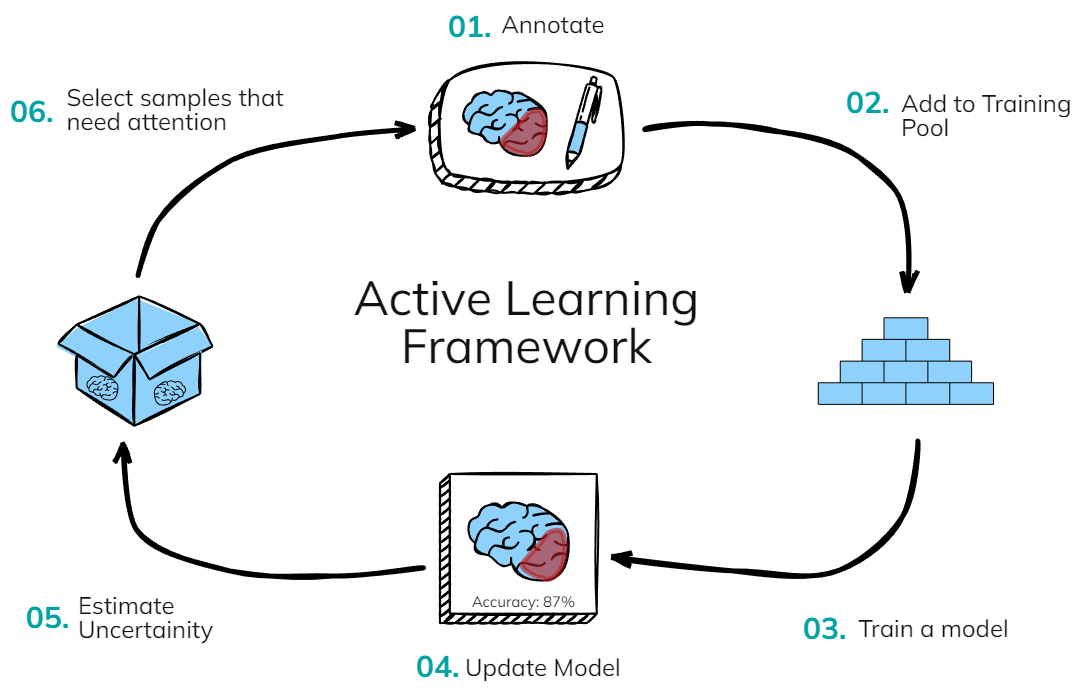
Every correction makes the next label cheaper
The server scores unlabeled volumes by model uncertainty and serves the most informative one next, so annotation effort goes where it teaches the model most.
Less annotation time
Faster model convergence
Accuracy with fewer labels
Smart Sample Selection
- Uncertainty sampling surfaces the hardest cases first
- Diversity metrics keep training data varied
- Ensemble disagreement flags ambiguous anatomy
Continuous Model Improvement
- Models retrain on new labels while you keep annotating
- Transfer learning from pre-trained MONAI bundles
- UNet, UNETR, and SwinUNETR supported out of the box
Quality Assurance
- Live validation metrics during annotation sessions
- Per-prediction uncertainty estimates
- Automated label quality checks
Learning
Resources & Training
Videos, guides, and example apps to go from first install to a custom annotation workflow.
Video Tutorials
Reference
How to cite MONAI Label
If MONAI Label supports your research, please cite the Medical Image Analysis paper:
@article{monailabel2024,
    title={MONAI Label: A framework for AI-assisted Interactive Labeling of 3D Medical Images},
    author={Diaz-Pinto, Andres and Alle, Sachidanand and Nath, Vishwesh and Tang, Yucheng and Ihsani, Alvin and Asad, Muhammad and P{\'e}rez-Garc{\'i}a, Fernando and Mehta, Pritesh and Li, Wenqi and Flores, Mona and Roth, Holger R. and Vercauteren, Tom and Xu, Daguang and Dogra, Prerna and Ourselin, Sebastien and Feng, Andrew and Cardoso, M. Jorge},
    journal={Medical Image Analysis},
    year={2024},
    doi={10.1016/j.media.2024.103207}
} Connect
Shape AI-assisted annotation
Get help, share your annotation workflows, and join the Human-AI Interaction Working Group: the community standardizing how humans and models annotate together.
Human-AI Interaction WG
The working group defining standard interfaces for AI-assisted annotation cycles.
GitHub Repository
Source code, sample apps, and discussions for real-world annotation scenarios.